Rechercher dans ce blog

Friday, August 28, 2020

4 herbs that may help boost your immune system naturally - Insider - INSIDER

herb.indah.link
  • Herbs that may benefit the immune system include echinacea, garlic, ginseng, and reishi mushrooms.
  • Ginseng can help your immune system by regulating immune cells, like T cells, that can help your body fend off threats.
  • Consuming garlic is also beneficial for the immune system, since it contains allicin, a compound that has antibacterial properties. 
  • This article was reviewed by Jason R. McKnight, MD, MS, a family medicine physician and clinical assistant professor at Texas A&M College of Medicine
  • Visit Insider's Health Reference library for more advice.

Whether you're facing cold and flu season or simply trying to stay healthy in general, it's crucial to keep our immune system robust. The immune system is responsible for preventing and fighting off infections, and when your immune system is strong, you're more likely to be able to ward off sicknesses. 

It's important to note that you won't be able to rely on herbs exclusively to fight sickness. To have a strong immune system, you need to get certain vitamins, eat healthy, sleep well, and exercise. And of course, the best way to reduce your risk of illness is to wash your hands frequently and avoid contact with people who may be sick. 

But on top of those recommended practices, some herbs may carry additional immune benefits. Here are four herbs recommended by experts to help you boost your immune system.

How herbs can benefit the immune system

Many herbs are antagonistic to pathogens, meaning they actively fight microorganisms like viruses, bacteria, worms, and bugs, says Mark Frost, MSTCM, L.Ac., Herbal Medicine Department Chair at American College of Traditional Chinese Medicine.  

And it's not just those experts in the field of traditional Chinese medicine who say herbs have these immune-boosting powers. Those who practice Western medicine are also in favor of adding herbs to a healthy diet. 

Deborah Ann Ballard, M.D., M.P.H., Internal Medicine Doctor at Duke Integrative Medicine, says that she recommends using a variety of herbs and spices in cooking to promote consumption. 

"Incorporating them regularly into a healthy diet has a very low risk of harm and a reasonable chance of helping our immune system fight off infections," says Ballard.

1. Echinacea

Echinacea is an herb with many uses. According to Mount Sinai Hospital, it has properties that can relieve pain and reduce inflammation, in addition to having antiviral and antioxidant effects. This makes it an ideal herb for supporting your immune system and boosting its function.  

A 2006 systematic review published in Cochrane Library determined that taking echinacea after cold symptoms like runny nose and congestion, can help reduce both the duration of how long you're sick and the severity of the cold. However, the researchers said that results were not consistent throughout all of the studies they analyzed. 

Additionally, a 2020 systematic review published in Advances in Integrative Medicine determined that echinacea can be beneficial for acute respiratory infections if the herb is taken at the onset of symptoms. This is because it can decrease the levels of pro-inflammatory cytokines that are associated with inflammation and respiratory infections. 

Frost says if you feel like you've been exposed to a lot of people and potential germs, or you feel like you might be getting sick, try taking echinacea two or three days in a row. Follow the dosing instructions on the packaging of the echinacea product you're consuming, or consult a herbalist. You can put some in tea or use it as a tincture.

2. Garlic

Garlic is a powerful antimicrobial herb, especially for the gut, says Frost. In fact, it is believed to be antibacterial, antiviral, and antiprotozoal (meaning it can fight parasites). Ballard says these properties can help fight off chest infections and respiratory infections.

Garlic contains allicin, and this is believed to be the compound that makes garlic antibacterial. According to a 2014 review published in Avicenna Journal of Phytomedicine, this makes it possible for garlic to fight bacteria such as salmonella and E. coli, which are bacteria that cause food poisoning.

On top of this, Frost says garlic is ideal for strengthening the digestive system. This makes it a good choice for treating parasites or worms in the gut. The Avicenna Journal of Phytomedicine review also references a study in which garlic was used to treat giardiasis, which is an infection caused by a parasite. Patients' symptoms resolved after 24 hours, after garlic was administered either through a 1mg/mL liquid extract twice a day, or a 0.6 mg/mL garlic capsule. 

Additionally, garlic has been found to help fight the common cold with its antiviral properties. A 2014 review published in Cochrane Library discussed one study that gave participants either garlic supplements with 180 mg of allicin daily over the course of 12 weeks or a placebo. The researchers found that those who received garlic were less likely to get a cold, and if they did get sick, they were sick for less days than those in the placebo group. However, more research is needed.

3. Ginseng

According to one study, this herb strengthens the HPA axis — the hypothalamic, pituitary, adrenal axis — which is responsible for regulating the immune system's response to stress. 

Chronic or severe stress can weaken the immune system, so it's important that you have a strong HPA axis to help manage the effect stress has on your immune system. By strengthening the HPA axis, you are strengthening the immune system, Frost says. 

Ginseng can also keep the immune system balanced by regulating various types of immune cells — including T cells, B cells, natural killer cells, and macrophages — which identify threats to the body and fight them off. There's even evidence that ginseng can fight off Influenza A in mice, although human research is needed. 

Frost says ginseng is very strong, and if you're considering incorporating it into your regimen, you should consult a herbalist. You can consume ginseng by making a tea with fresh ginseng root, or you can take ginseng capsules.

4. Reishi

Reishi, also known as Lingzhi, is a type of mushroom. Reishi mushrooms contain beta-glucans, which are believed to stimulate different types of cells in the immune system, including monocytes, natural killer cells, and dendritic cells. By stimulating these cells, they are better able to detect and fight off infections. 

There's even some evidence that the beta-glucans in reishi can have anti-tumor effects, stopping the growth of cancer cells, according to the Memorial Sloan Kettering Cancer Center. However, more research needs to be done to further understand the benefits of resihi mushrooms. 

You can buy reishi powder or capsules to consume. 

The bottom line

Before you start taking any of these herbs, you should consult with your doctor to make sure that they will not negatively interact with any medications you're taking. You should also make sure that you get an accurate diagnosis if you are sick — it's worth visiting a doctor to see which treatments they recommend before you try herbal remedies. 

If you want to try these herbs, speaking with a qualified herbalist or traditional Chinese medicine practitioner can help you figure out which herbs might work for you, as well as the best way to take them. They can also help you determine where to buy the herbs to make sure you are using quality products. 

The Link Lonk


August 29, 2020 at 03:25AM
https://ift.tt/31E0lPO

4 herbs that may help boost your immune system naturally - Insider - INSIDER

https://ift.tt/3eCf9lu
Herb

“Organic herbs aren't the only thing that interests us; so does the social aspect” - hortidaily.com

herb.indah.link

Herb growers, in general, are increasingly looking for zero residue products for that market. For Wilco Heemskerk of the Dutch company, Fresh Organic Choice, there’s, however, only one thing that matters - 100% organic herbs, delivered throughout the year.

“Our sourcing and strength are designed in such a way that we can supply organic herbs to the market year-round,” says Wilco. “Between May and September, these come from our growers in the Netherlands and Germany. We also get herbs from abroad. Mainly from Southern European countries such as Portugal, Spain, and Italy.”

“We have a wide range of organic herbs that are added to meal boxes. We supply retailers, wholesalers, and hospitality industry suppliers too. This spread has helped us to get through the corona crisis. Sales differed greatly per sector as well as per the products we offer.”

“We’ve also been busy expanding our range. This year, our assortment of organic herbs is complete. From the beginning of 2020, we’ve managed to include French Dragon. We also offer unusual types of herbs from March to September. These are Thai Basil, Red Basil, and Garlic Chives,” Wilco continues.

“From 2021, we hope to be able to supply these special varieties to our clients all year round. As a last novelty, we’ve recently introduced organic Salicornia, which we added to our range. We had been working on this behind the scenes for some time.”

“We work closely with our customers and suppliers, so we’re able to develop these novelties. In doing so, we try to create space for them on the existing market. We’re not idle regarding packaging either,” adds Wilco. “Most of our packaging is made of PLA and is, therefore, compostable. Many of our clients demand PLA-produced packaging.”

“This will only increase in the future. At the end of 2019, we were able to develop and introduce a new PLA tray. This was done for one of our meal box clients. We did this in partnership with Patrick Gerritsen from Bio4Pack. That proved to be a great success for the client. There are still plenty of opportunities in this area as well.”

“We pay close attention to our clients and maintain close contact with all our suppliers - whether they be growers or produce packaging or other materials. In this way, we’re building a good, durable organization and environment that consider the social side of things too. We’re doing this with the collaboration and trust of our business partners.”


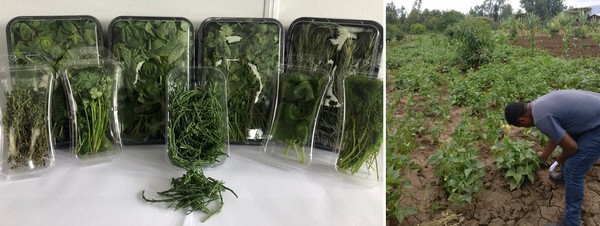
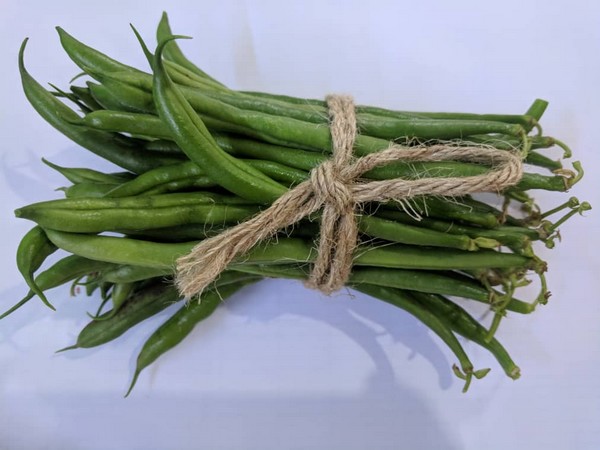
In addition to herbs Wilco also imports green beans from Ethiopia

Ethiopia
Fresh Organic Choice doesn’t source its herbs solely from the Netherlands, Germany, and southern Europe. A small proportion of its herbs come from Ethiopia. There, Wilco works with local growers in ‘a type of cooperative’. He’s set up an organic cultivation program in that country. “It’s sometimes tricky,” Heemskerk says.

“People who buy organic products often aren’t eager to purchase flown-in herbs. That’s primarily due to this kind of import’s CO2 emissions. Still, we choose to import these together with products like organic legumes from Ethiopia. That’s because this program supports the farmers and their families. They can get a fair price for their products. When we explain that social compliance aspect, clients understand.” 

Zero residue
Many traditional herb growers are being drawn to the idea of zero residues. “In principle, organic is a form of zero residue farming. We use MRL analysis to keep track of whether our growers are sticking to the terms of organic herb farming,” explains Wilco. “We can still get added value for organic herbs.”

“And, in the Netherlands and Europe, there’s still plenty of room to grow on this market. Supermarkets still sell a lot of conventional herbs.” Wilco is also already considering eventually expanding the company’s assortment. “We want to bring more niche products onto the market next year. These used to be difficult to grow organically.”

“We’re also going to keep offering our organic Ethiopian beans and sugar snaps. And we’ll continue supplying organic radishes and lettuce outside the Dutch season. These are used in the meal boxes and by organic vegetable processors,” says Wilco.

The organic sector isn’t (yet) very interested in innovations like vertical farming and hydroponics. “The European Union has clear regulations regarding organic herbs and other organic products. They can only be called organic if they’re grown in a field. That’s why we don’t find these new ideas attractive at the moment. This type of cultivation might be 100% and have zero residues. Or it might be something else. What it’s not, is organic.”

Wilco notices there are increasing weather extremes that affect herb farming. “We had a dry period in June. During that time, certain herbs suffered greatly from aphids. There are usually fewer of these when the seasons change. But, it rained at the end of June and the beginning of July. So, for organic farming, the weather’s changing for the better,” Wilco concludes.

More information:
Fresh Organic Choice
www.freshorganicchoice.nl

Wilco Heemskerk
wilcoheemskerk@forc.eu 

The Link Lonk


August 28, 2020 at 06:23PM
https://ift.tt/3b5lKog

“Organic herbs aren't the only thing that interests us; so does the social aspect” - hortidaily.com

https://ift.tt/3eCf9lu
Herb

The One Herb This Naturopathic Doctor Says Turns Your Meals Into "Super Recipes" - mindbodygreen.com

herb.indah.link

Methylation is a biochemical process that naturally happens in our bodies (read up on the methylation cycle here), and the end goal is to create the amino acid homocysteine. However, too much homocysteine in the body is a risk factor for heart disease and blood clots—that's why at the end of the methylation cycle, the amino acids that create homocysteine are recycled, and the entire process starts anew. When this methylation cycle is imbalanced, however, you can accumulate an excess of homocysteine and face the aforementioned health risks. 

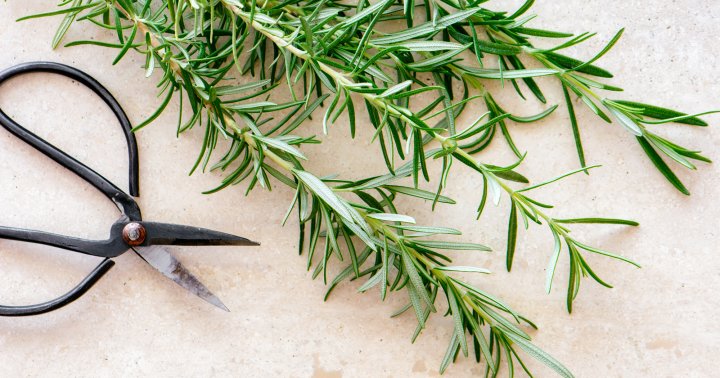
So now, back to rosemary: Fitzgerald notes that the herb is incredible for balancing the methylation cycle. Specifically, it's the compound in rosemary called rosmarinic acid that makes it so suberb. "Rosmarinic acid is a brilliant [methylation adaptogen]," she notes. It makes sense the compound would have such an effect at the cellular level, as multiple studies have highlighted rosmarinic acid's antioxidant and anti-carcinogenic properties. And according to Fitzgerald, all it takes is garnishing your recipes or sipping some straight rosemary tea to reap the benefits. 

The Link Lonk


August 28, 2020 at 05:16PM
https://ift.tt/3b4xUh5

The One Herb This Naturopathic Doctor Says Turns Your Meals Into "Super Recipes" - mindbodygreen.com

https://ift.tt/3eCf9lu
Herb

Watch the Video for Herb Alpert's New Single "Smile" - JAZZIZ Magazine

herb.indah.link

From trumpet icon Herb Alpert comes a powerful new music video that speaks to our country’s search for hope in the face of adversity. Below, watch the teaser for his new song “Smile,” which arrives in advance of a new documentary, Herb Alpert Is…, due out on October 1. A companion box set of the same name. Herb Alpert Is… will also be available on October 2, digitally, in LP format featuring a coffee table book and a five-piece 180 gram vinyl set, and on CD as a 3-disc set. Both physical formats will feature 63 songs spanning 5 decades, 180 pages of vintage photos, liner notes and an essay from music journalist Bud Scoppa. The box set is available for preorder today here.

From the press release:

Following the announcement of both a career-spanning boxed set and a new documentary out this fall, today Herb Alpert has released a new single, his take on the great American classic, “Smile.” The music was originally composed by Charlie Chaplin and later made famous by Nat King Cole. Here, Alpert has brought his signature sound – hopeful and happy to both the song and its stunning companion video directed by Clark Jackson (Lana Del Ray, Lady Gaga, Miguel). “I wanted to create something optimistic and uplifting that acknowledged the current times that we are in and more importantly, that we will all get through this together and be stronger,” said Alpert.

On October 1st the documentary Herb Alpert Is… will have its world premiere. The global event will take place via Facebook LIVE and will feature a Q&A with Herb Alpert and director John Scheinfeld moderated by the Grammy Museum’s Artistic Director Scott Goldman immediately following. October 2nd the film will be available via a nationwide virtual cinema release and globally on demand through Amazon, iTunes and other video-on-demand providers. The film will also be available on Blu-Ray and DVD via Amazon.

The Link Lonk


August 28, 2020 at 09:16PM
https://ift.tt/2YKq47t

Watch the Video for Herb Alpert's New Single "Smile" - JAZZIZ Magazine

https://ift.tt/3eCf9lu
Herb

Meeting House Herb Farm - Press Herald

herb.indah.link

The National Wildlife Federation has named Meeting House Herb Farm a Certified Wildlife Habitat through its Garden for Wildlife Movement. Courtesy photo of Emily Springer

SCARBOROUGH — Meeting House Herb Farm, a Scarborough business, received a National Wildlife Habitat certification on Aug. 20, having cultivated a clean environment for various species since opening in 2017.

The certification comes from the National Wildlife Federation, the largest conservation group in the United States, said an announcement from Meeting House Herb Farm and the organization. The National Wildlife Federation has certified 227,000 habitats in the past 45 years through the Garden for Wildlife Movement.

Since opening in 2017, Meeting House Herb Farm has been a no-till farm located in the center of Scarborough, in a suburban area, that values creating a sanctuary for local wildlife, like birds, butterflies, frogs, and bees, Emily Springer, co-founder and managing partner, said.

The farm represents six different herbal growers in Maine, cultivating over 80 different herbal species, she said.

The team was excited to receive certification, Springer said.

“We were all thrilled and it’s a really nice validation of the work we’re doing,” she said.

Anyone can restore wildlife habitats in their own yards or communities, David Mizejewski, National Wildlife Federation naturalist, said.

“Whether you garden in a suburban yard, an urban area or a rural plot of land, you can make a difference for local wildlife,” he said. “Creating a Certified Wildlife Habitat garden is fun, easy and makes a real difference for neighborhood wildlife. It’s the perfect grassroots way to think globally and act locally and help birds, butterflies, bees and other wildlife.”

This is a lesson that Meeting House Herb Farm also wants to teach the public, Springer said.

“I would love for people to understand that no plot of land is too small to create a wildlife habitat,” she said. “You can actually see the change. It’s visible and very rewarding.”

Meeting House Herb Farm, located in Scarborough is a no-till farm that grows over 80 medicinal species of plants. Co-Owner Emily Springer said that the team is mindful of how plants are grown on the farm and has always had the goal of being a wildlife habitat. Courtesy photo of Emily Springer

Because of the suburban location, Meeting House Herb Farm found it difficult to maitain a habitat with neighbors who chose to spray pesticides, which killed wildlife, Springer said.

“What we did to counteract that was to erect a fence where we knew there was a lot of pesticides sprayed,” she said. “We also created at least a 20-foot buffer zone all the way around our property. It creates this buffer so everything within the 20-foot line is very clean and pure.”

The farm is mindful of where and how plants are grown, she said. Instead of tilling soil, Meeting House Herb Farm uses an alternative method of laying cardboard over soil, layering that with six inches of compost, and topping that off with woodchips or straw.

The no-till method helps preserve micro fungi that live in the soil, Springer explained.

“Every time you till the soil, it brings up soil from below and breaks up the soil structure,” she said. “It softens the soil, which makes it easier for planting, but it exposes the micro fungi, which are incredibly important fungi that help the plant to gain the appropriate nutrients to the soil. It exposes those to the air, where they really shouldn’t be, and destroys them. It also disrupts earthworm habitats.

“By not tilling, we’re able to maintain the soil structure as it is,” she added. “We’re able to maintain earthworm habitats, which are important for plant growth. And the most important part is we’re able to maintain the existing micro fungi.”

In 2021, Springer said that she hopes the farm will be able to teacj classes again. Meeting House Herb Farm also offers a consignment agreement with the public.

“We’re making herbs accessible to anybody who’s willing to work two hours a week,” Springer said. “It’s a beautiful job every day to go out and work with plants.”

Comments are not available on this story.

filed under:
The Link Lonk


August 28, 2020 at 02:27AM
https://ift.tt/32xahtR

Meeting House Herb Farm - Press Herald

https://ift.tt/3eCf9lu
Herb

COVID-19 Impact: on Herb & Spice Extracts Market Trends, Size, Forecast – 2020-2027 | Dohler, Sensient, Archer Daniels Midland, Ajinomoto - Scientect

herb.indah.link

Global Herb & Spice Extracts Market Research Report 2020 - 2027The analyst also focuses on economic and environmental factors, which impacts on the growth of the businesses. For global analysis, the Herb & Spice Extracts Market is examined by considering the different regions such as North America, Latin America, Japan, China, and India. Leading companies are focusing on spreading their products across the regions. Research and development activities of the various industries are included in the report, to decide the flow of the market. Financial records of the top key players are provided in the report, which helps to understand the basic scenario of the market share. It includes the static view as well dynamic view of the industries, which helps to promote the accurate outline of the businesses.
Get Sample Copy (Including FULL TOC, Graphs and Tables) of this report @: https://www.contrivedatuminsights.com/request-sample/31627
It gives a detailed description of drivers and opportunities in Herb & Spice Extracts market that helps the consumers and potential customers to get a clear vision and take effective decisions. Different analysis models, such as, Herb & Spice Extracts are used to discover the desired data of the target market. In addition to this, it comprises various strategic planning techniques, which promotes the way to define and develop the framework of the industries.
The following manufacturers are covered in this report:
Dohler, Sensient, Archer Daniels Midland, Ajinomoto, Symrise, Firmenich, Naturex, Kalsec, Olam.
Competition Analysis
This report examines the ups and downs of the leading key players, which helps to maintain proper balance in the framework. Different global regions, such as Germany, South Africa, Asia Pacific, Japan, and China are analyzed for the study of productivity along with its scope. Moreover, this report marks the factors, which are responsible to increase the patrons at domestic as well as global level.
Global Herb & Spice Extracts Market Segmentation:
On the Basis of Type:
Herb Extracts
Spice Extracts
On the Basis of Application:
Food
Beverages
Personal Care
Nutraceutical
Pharmaceutical
Others
Regions Covered in the Global Herb & Spice Extracts Market:
The Middle East and Africa (GCC Countries and Egypt)
North America (the United States, Mexico, and Canada)
South America (Brazil etc.)
Europe (Turkey, Germany, Russia UK, Italy, France, etc.)
Asia-Pacific (Vietnam, China, Malaysia, Japan, Philippines, Korea, Thailand, India, Indonesia, and Australia)
The Herb & Spice Extracts market is expected to grow in the upcoming 2020 to 2027 year. Different risks are considered, that helps to evaluate the complexity in the framework. Progress rate of global industries is mentioned to give a clear picture of business approaches. Various factors, which are responsible for the growth of the market are mentioned accurately.
 
The global Herb & Spice Extracts market is divided on the basis of domains along with its competitors. Drivers and opportunities are elaborated along with its scope that helps to boosts the performance of the industries. It throws light on different leading key players to recognize the existing outline of Herb & Spice Extracts market.
Hurry Up! Get Up to 20% Discount on this [email protected]: https://www.contrivedatuminsights.com/request-discount/31627
The report’s conclusion leads into the overall scope of the global market with respect to feasibility of investments in various segments of the market, along with a descriptive passage that outlines the feasibility of new projects that might succeed in the global Herb & Spice Extracts market in the near future. The report will assist understand the requirements of customers, discover problem areas and possibility to get higher, and help in the basic leadership manner of any organization. It can guarantee the success of your promoting attempt, enables to reveal the client’s competition empowering them to be one level ahead and restriction losses.
Table of Content (TOC):
Chapter 1 Introduction and Overview
Chapter 2 Industry Cost Structure and Economic Impact
Chapter 3 Rising Trends and New Technologies with Major key players
Chapter 4 Global Herb & Spice Extracts Market Analysis, Trends, Growth Factor
Chapter 5 Herb & Spice Extracts Market Application and Business with Potential Analysis
Chapter 6 Global Herb & Spice Extracts Market Segment, Type, Application
Chapter 7 Global Herb & Spice Extracts Market Analysis (by Application, Type, End User)
Chapter 8 Major Key Vendors Analysis of Herb & Spice Extracts Market
Chapter 9 Development Trend of Analysis
Chapter 10 Conclusion
Place a Direct Order Of this Report: https://www.contrivedatuminsights.com/buy/31627
 
Note – In order to provide more accurate market forecast, all our reports will be updated before delivery by considering the impact of COVID-19.
 
In the event that you don’t find that you are looking in this report or need any particular prerequisites, please get in touch with our custom research team at [email protected]
 
About CDI: Contrive Datum Insights (CDI) is a global delivery partner of market intelligence and consulting services to officials at various sectors such as investment, information technology, telecommunication, consumer technology, and manufacturing markets. CDI assists investment communities, business executives and IT professionals to undertake statistics based accurate decisions on technology purchases and advance strong growth tactics to sustain market competitiveness. Comprising of a team size of more than 100analysts and cumulative market experience of more than 200 years, Contrive Datum Insights guarantees the delivery of industry knowledge combined with global and country level expertise.
We are always happy to assist you on your queries: [email protected]
Phone No:+19084598372
Contrive Datum Insights: www.contrivedatuminsights.com/

The Link Lonk


August 28, 2020 at 11:27AM
https://ift.tt/31A4eFx

COVID-19 Impact: on Herb & Spice Extracts Market Trends, Size, Forecast – 2020-2027 | Dohler, Sensient, Archer Daniels Midland, Ajinomoto - Scientect

https://ift.tt/3eCf9lu
Herb

Thursday, August 27, 2020

Is vertical farming the future of herb cultivation? - FreshPlaza.com

herb.indah.link

Berjelle van Namen’s roots lie primarily in mushroom cultivation. His father, Johan, has a farm on the banks of the Maas river in the Netherlands. Yet, a few years ago, Berjelle decided to add herb cultivation. Not in a greenhouse or in full soil; in a converted mushroom cultivation cell.

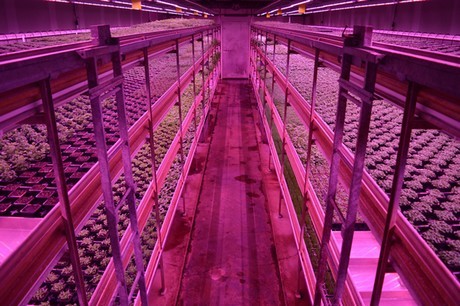
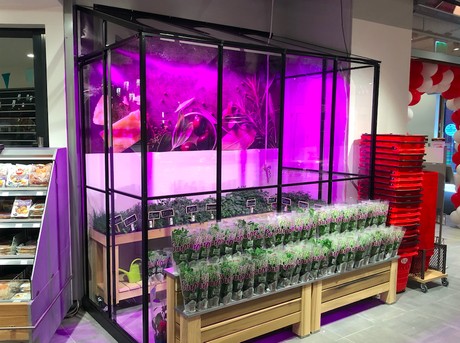
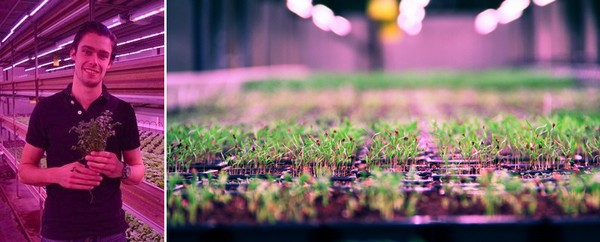
The room is illuminated with violet-colored LED bulbs, and the containers holding the herbs are stacked, one atop the other. This can clearly be considered vertical farming. This concept is gaining increasing popularity among farmers - especially those who grow herbs, leafy and micro vegetables, and edible flowers.

There have even recently been trials with soft fruit. It’s been standard practice in the mushroom world for some time now. Hence the relationship between Van Namen mushrooms and the herbs of Van Namen Specialties.

For Berjelle, it started as an experiment. He encountered this cultivation method during his internship in Finland. There, at Robbe’s Little Garden, they grow lettuce, herbs, and micro vegetables in this way. According to Berjelle, vertical farming offers numerous advantages over traditional herb cultivation.

Vertical farming’s advantages
“With vertical farming, I can plant a herb, and can be sure it'll ready to sell in five weeks,” says Berjelle. “You also have certainty about your product’s quality. That’s because the product is optimally controlled. The plant grows evenly, thanks to the LED lighting, so it tastes better too."

"It satisfies clients, who are increasingly demanding just-in-time delivery of products like herbs. Of course, we mustn’t forget the sustainable character of this cultivation method. Especially since farming like this uses very little gas, and no pesticides. We’re looking for ways to be highly energy-efficient too.”

There was a demand for herbs
Berjelle now grows about 12 kinds of herbs and has added a second cell. “In this way, we can vary cultivation conditions like using different temperatures," explains van Namen. "Basil is our top seller. It’s a popular herb that sells well. It’s followed by herbs such as parsley and mint.”

Berjelles sells his herbs under the company’s own brand, Pika Surprisa, and Esperanto for ‘spicy surprises’. Still, Berjelle points out that it’s mainly enjoyable to cultivate and experiment with these herbs. “It’s not quite profitable yet. To achieve this, you’d have to seriously consider scaling up and adding rooms."

"You’d also have to see if you want to grow only one variety. We chose to grow herbs mainly because of the increasing demand for year-round delivery and consistent quality. Vertical farming guarantees this. You can also be relatively lazy with your purchases. You know what you’ll get on the day you want it."

"From the cultivation side, there aren’t as many operational issues either. Although you always have to deal with that. The only thing is, it doesn’t save labor; hands are still needed in that cell,” admits Berjelle.

Herb sales differ from those of mushrooms. “We’ve attracted many new clients who really only buy herbs, and we’ve noticed fewer clients buying both. We keep these two products separate. That’s why the herbs fall under Van Namen Specialties. For example, we export mushrooms to countries like Germany and the UK, but not yet our herbs. Perhaps we will in the future.”

For the coming months, Van Namen’s main goal is to make it through the corona crisis successfully. “The mushroom market was very volatile in these unusual times. It’s slowly recovering, but it still has a long way to go. There aren’t any major developments planned for the rest of the year, either. Now, it's mostly a matter of serving our clients well,” Berjelle concludes.

More information:
Van Namen Specialties
www.vannamenspecialties.nl

Berjelle van Namen
berjelle@vannamenspecialties.nl  

The Link Lonk


August 27, 2020 at 07:05PM
https://ift.tt/3hyQpgf

Is vertical farming the future of herb cultivation? - FreshPlaza.com

https://ift.tt/3eCf9lu
Herb

Featured Post

Founder of herb garden at Morton Grove church inspired by 12th century St. Hildegard - Chicago Tribune

herb.indah.link [unable to retrieve full-text content] Founder of herb garden at Morton Grove church inspired by 12th century St. Hildegard...

Popular Posts