Rechercher dans ce blog

Wednesday, September 2, 2020

Obituary for Hebert "Herb" Bacon, Searcy, AR - Arkansas Democrat-Gazette

herb.indah.link

Herbert A. "Herb" Bacon died peacefully at his home on August 31, 2020. He was 91 years old. He was born in Palestine, Texas, to Hub and Francis Bacon. After graduating from Palestine High School he attended the University of Texas in Austin, where he met his future wife, Mitzie King. He later transferred to Sam Houston State Teachers College (now Sam Houston State University) and obtained a degree in mathematics. After college, he served in the United States Army, stationed at Ft. Riley, Kan. Herb worked for J. C. Penney Co. for 37 years, finishing his career as manager of the Searcy store after 23 years. He was proud of his adopted hometown and was very civic-minded. He was active in the Searcy Rotary Club and the Searcy Chamber of Commerce, serving as president for both organizations. He enjoyed his years working downtown, especially telling stories/giving advice during coffee at Headlee's Drug Store. Herb was an avid photographer – at one point working professionally on weekends and evenings. He enjoyed camping, fishing, and cooking and could build or fix almost anything. He was an active member of Searcy First United Methodist Church where he taught Sunday School and sang in the choir for over 5 decades. He was preceded in death by his parents and his wife of 65 years, Mitzie Bacon. He is survived by sons, Donald (Linda) of Little Rock and Robert (Dian) of Fayetteville; grandchildren Mark, Scott (Mallory), Katie, and Bill; and great-grandson Fletcher. Herb was a committed Christian who lived his faith. This was evidenced clearly by the way he sacrificially cared for Mitzie in the last years of her life. He showed all how to be a servant leader. The family wishes to thank Ashley Yancey, Caitlin O'Dell, Debbie Cullum, and Keisha Balmer for the loving care provided in his later years. Because of COVID-19, the family will have a private service. Memorials may be made to First United Methodist Church Searcy, 304 N. Main St., Searcy, Ark. 72143. Arrangements entrusted to Powell Funeral Home of Searcy. www.powellfuneralhome.net

Published September 2, 2020

OBITUARY SUBMITTED BY:
Powell Funeral Home
2602 W Beebe Capps Expressway, Searcy, AR
Phone: 501-268-7220
http://www.powellfuneralhome.net

The Link Lonk


September 02, 2020 at 12:04PM
https://ift.tt/32UbdZE

Obituary for Hebert "Herb" Bacon, Searcy, AR - Arkansas Democrat-Gazette

https://ift.tt/3eCf9lu
Herb

Monday, August 31, 2020

Best Indoor Herb Gardens - Best Herbs To Grow Indoors - Delish

herb.indah.link

A handful of freshly chopped or torn herbs can elevate any home-cooked meal from good to great. And when you can pick those herbs seconds before serving your meal? Well, that's just about as good as it gets.

Growing your own herbs can save you money and prevent food waste. Rather than buying a big, expensive container of one herb (that goes bad before you can figure out what to do with all of it), you can snip off as much or as little as you need, when you need it. As an added bonus, a few pots of greenery can really liven up your kitchen. Yes, it's time to become the urban farmer you always knew you were destined to be.

Two things to consider before you begin your herb farming journey:

  1. You'll need a spot with plenty of sunlight; most herbs will need between four and six hours of full sunlight to be happy. Before you start buying pots and seeds, figure out how many areas in your apartment meet your sun requirements, and how many pots they can accommodate.
  2. All herbs need good drainage. A plant that is draining properly will allow water to flow freely through the soil to prevent roots from sitting in water and rotting. Buy potting soil that encourages drainage, and make sure your pots include a hole at the bottom to allow excess water to drain.

Below, check out our top 10 favorite indoor herbs, plus how to grow them and what to use them in. Happy growing!

Basil

basil in plantpot, close up

Westend61Getty Images

If you've got a windowsill with plenty of light, growing basil will be a breeze. Easy to grow from seed, basil needs at least four hours of full sunlight. Keep the soil fairly moist and watch your seeds transform into adorable little basil sprouts in a matter of days. In two to three weeks you'll have plenty of fragrant basil leaves! Use them in a summery caprese salad, to garnish a homemade pizza, or blitzed up with nuts and parmesan for a flavorful pesto.

Bay Leaves

laurel

annick vanderschelden photographyGetty Images

If you like cooking with dry bay leaves, wait 'til you try them fresh! They've got a much more pungent flavor, and they make a great indoor plant. Growing bay leaves from seeds can be tricky, as they take months to germinate. Try starting with a seedling so you can get to cooking with them ASAP. Place your bay leaf plant in a sunny area with plenty of air circulation, and let the soil get dry between waterings. Enjoy your home-grown bay leaves in everything from mushroom risotto to bolognese sauce and beyond.

Chives

chives on a windowsill

Image SourceGetty Images

For fresh chives at your fingertips, place your chive plant in a super sunny area—we're talking six hours of full sun, if you can manage it. Water frequently and trim using clean scissors when the plant is at least six inches tall, cutting about two inches above the soil. Add a handful of freshly chopped chives to brighten up your homemade egg salad, loaded potato soup, or omelet.

Dill

fresh organic dill

Nicholas KostinGetty Images

Dill can easily be grown from seed and will take about six to eight weeks to grow into a mature plant. Make sure your plant is getting five to six hours of full sunlight a day, and allow the soil to dry out in between waterings. You can use your homegrown dill to add flavor to all sorts of recipes, from spanikopita to matzo ball soup.

Oregano

oregano origanum vulgare

AYImagesGetty Images

Fresh oregano is incredibly flavorful, and it's used in a wide variety of cuisines. To grow it yourself, start from seeds, an existing plant, or leaf cuttings. Give your plant as much sun as possible, and let the soil dry out between waterings. Use your fresh oregano to make chimichurri, Greek salad, or these ultra-cheesy enchilada meatballs. Fresh oregano can always be substituted for dried, just start small as the fresh leaves are far more pungent.

Parsley

high angle view of plants

Kristin Oldenburg / EyeEmGetty Images

Parsley is one of the most ubiquitous herbs in American cooking, and having it at arms reach is so useful when you need to add a pop of green or some verdant freshness to your cooking. Start parsley plants from seed or buy an existing plant, and keep it in the sunniest place in your house—ideally with six hours of full sun. Give your parsley plants a decent watering once a week, maybe twice if it's particularly hot. Use your parsley bounty in shrimp scampi, to garnish garlicky spaghetti, or mix it into a compound butter for our garlic butter salmon.

Rosemary

rosemary

Tom MertonGetty Images

This hearty herb is one of our favorites to grow indoors. Give rosemary as much sunlight as you can (six hours, ideally) and let the soil dry out between waterings. To encourage growth, trim your rosemary regularly, cutting off no more than ⅓ of plant at a time. Use rosemary in oven-roasted potatoes, a refreshing gin fizz, or, if you're feeling fancy, juicy roast lamb.

Sage

growing sage

Daniela DuncanGetty Images

    Another super hearty herb, sage grows well year-round indoors. It prefers medium to full sunlight and intermittent waterings. Sage leaves are a staple in fall and holiday cooking, so naturally it's great in sausage stuffing, butternut squash ravioli, and turkey gravy.

    Tarragon

    potted tarragon and two pebbles on a wooden plank

    Sue WilsonGetty Images

      With a subtle anise flavor, French favorite tarragon is a great addition to any windowsill herb collection. Tarragon likes five to six hours of full sunlight and intermittent watering. Try it in chicken salad, sprinkled on top of roasted zucchini, or in a panzanella salad.

      Thyme

      a young person is gardening indoor

      Karl TapalesGetty Images

      Happy in lots of sunlight, thyme is a hearty indoor herb with countless uses. This low maintenance plant can be grown from seeds or clippings, but with pots of thyme available just about everywhere, there's no need to propagate. We love the sweet and earthy flavor of thyme in dishes like classic roast chicken, baked cod, and stuffed mushrooms.

      This content is created and maintained by a third party, and imported onto this page to help users provide their email addresses. You may be able to find more information about this and similar content at piano.io

      The Link Lonk


      September 01, 2020 at 03:25AM
      https://ift.tt/2EWUzQo

      Best Indoor Herb Gardens - Best Herbs To Grow Indoors - Delish

      https://ift.tt/3eCf9lu
      Herb

      How to spice up your garden with unique herb varieties - OCRegister

      herb.indah.link

      If the gardening bug has bit you during the novel coronavirus pandemic and you’ve loved growing fresh herbs in a garden or planter box, the end of summer when everything starts to wilt and dry may feel like the end of that experience, but it doesn’t have to be.

      Now is still a great time to plant new herbs, even amid the heat. And then there are cool season herbs that are perfect for planting in November and beyond.

      And you’re not just stuck with the standard green basil, Italian oregano or thyme.

      What to grow now

      Some herbs love heat and humidity, which means you should keep them growing mainly in the spring and summer, said Carrie-Anne Parker, owner of nursery stock grower Rolling Hills Herbs and Heirloom Annuals in Redlands.

      One of those is basil, but you can plant basil from seeds and get more than one harvest over the warmer months, Parker said.

      She said that basil that you sow in March or April might be getting tired at this point: their stalks are getting woody and they’re starting to make flowers, but it’s still warm enough through the fall that you can plant another crop now.

      “It’s going to germinate so quickly because the soil temperature is perfect,” she said.

      There are many different varieties of basil. In addition to the more traditionally known green Genovese basil that’s standard at plant nurseries, there’s Thai basil, Persian basil, lemon basil, cinnamon basil and even a “lettuce leaf” variety with big crinkled leaves.

      Parker said there are also basils that are not for culinary uses, but work great in teas such as the “holy basil” varieties Kapoor and Krishna.

      Basils also come in different colors. You might consider a basil that’s bright purple, speckled with purple dots or variegated with white stripes to add a pop of color in your garden.

      Leah Beattie, a manager at Laguna Hills Nursery in Santa Ana, said that some popular summertime plants that her nursery offers are alternatives to cilantro, including Bolivian cilantro and Vietnamese coriander. These plants grow better during the hot summer months than cilantro does. Neither plant is related to cilantro, but they’re similar in taste profiles.

      Beattie said the Vietnamese coriander is the most similar to actual cilantro. She said the Bolivian cilantro has a much stronger flavor that will remind you in part of cilantro, but also of arugula and rue.

      Beattie said there are some important considerations that herb growers need to keep in mind for this hottest part of the season.

      “Watering is the most important thing,” she said, adding that plants need to be watered well and often.

      Beattie said that for herbs in containers and even in the ground, it’s not a bad idea to put some mulch around them to help seal in moisture.

      She said trimming potted herb plants to a smaller size is another trick to keep them from drying as quickly in the heat.

      • Cilantro, pictured here between two zucchini plants, is a plant that actually grows better in cooler weather months instead of the summer. (Photo by Alex Groves, The Press-Enteprise/SCNG)

      • This basil, a variety called Genovese Red Freddy, is a purple basil that loves warm weather. Basil is a kind of plant that generally needs to be grown during warm months, one expert said. It loves heat and humidity. (Photo by Alex Groves, The Press-Enterprise/SCNG)

      • Sound

        The gallery will resume inseconds

      • Pictured is a plate with purple Genovese basil, green Genovese basil and Thai basil. (Photo by Alex Groves, The Press-Enterprise/SCNG)

      • Pictured from left to right is orange mint, chocolate mint and lime thyme in pots. Mints and thyme are two types of herbs that come in many different varieties. (Photo by Alex Groves, The Press-Enterprise/SCNG)

      • Pictured from front to back is berggarten sage, lime thyme, chocolate mint and orange mint in pots. (Photo by Alex Groves, The Press-Enterprise/SCNG).

      Plan ahead for the fall

      Start thinking about your fall herb garden now.

      Parker that the plants that are often springtime plants in other parts of the country are fall plants here in Southern California because our weather is warm year-round and we hardly ever freeze.

      “Our climate will be more spring-like in the fall,” Parker said.

      That cilantro that doesn’t do so hot in July or August and makes flowers right away? There’s a reason for that: It needs it to be cooler.

      “Cilantro will thrive in November all the way through March of next year, maybe into April or May,” Parker said. She recommended planting in November to give the plants the optimal root establishment and growth through the start of spring.

      Aside from cilantro, there are more unique herbs that are optimal for those cooler months, including chervil and unusual varieties of thyme.

      Chervil, common in French cooking, is lacy and similar in shape to a parsley. It has an anise-like characteristic that imparts a slight hint of black licorice, Parker said.

      “It’s amazing in peas or eggs; the lighter dishes,” she said. “It gives a wonderful green note and a really nice flavor.”

      Thyme is also a cooler season herb and there are many variants. In addition to the traditional variety, other options include lemon thyme and spicy orange thyme, the latter of which Parker said has a citrus note that makes it perfect for dishes such as braised carrots.

      Parker said that mint, a perennial herb that comes in many different varieties, can be grown year-round but it’s best to plant it in the fall to let it get established. However, she warns that it’s pretty hard to remove mint from your garden once you plant it because it propagates from even tiny root hairs underground.

      Where to find unique herbs 

      If you’re looking for some of the different herbs that are good choices for this season or the fall, local nurseries will often have unique additions to their regular stock of more common herbs.

      You can also find seeds for many of the herbs from seed companies that offer less common varieties, including Baker Creek Heirloom Seeds, Kitazawa Seed Company, Renee’s Garden and Burpee.

      Keep up the momentum 

      Parker said the important thing is to remember that if you’ve gotten through summer, you’ve already gotten through Southern California’s hardest growing season and as the next few months, Mother Nature will cool down and water for you, and the selection of plants that you can actually grow will be greater.

      “If you’ve been bitten by the gardening bug, don’t think you need to stop,” she said. “Know it’s going to get easier.”

      The Link Lonk


      August 31, 2020 at 10:08PM
      https://ift.tt/3lzz6xV

      How to spice up your garden with unique herb varieties - OCRegister

      https://ift.tt/3eCf9lu
      Herb

      Home on the Range: Zucchini-Herb Butter - Seven Days

      herb.indah.link
      click to enlarge Zucchini-herb butter - MELISSA PASANEN ©️ SEVEN DAYS
      • Melissa Pasanen ©️ Seven Days
      • Zucchini-herb butter
      Late-summer zucchini is the Rodney Dangerfield of vegetables. It gets no respect.

      As in, "Make sure you lock your car doors and barricade your front porch against neighbors trying to rid themselves of  green monsters that balloon to the size of baseball bats overnight."
      In truth, really huge zucchini are not good for much. They tend to be spongey, seed-filled and so mild in flavor that they don't add anything to whatever recipe you try desperately to hide them in.

      But merely large zucchini are well deployed in this unctuous zucchini butter. Coarsely chopped zucchini (and summer squash if you like) is stewed slowly in olive oil with a touch of butter, along with generous amounts of garlic and fresh herbs.

      click to enlarge Cooking down zucchini and summer squash - MELISSA PASANEN ©️ SEVEN DAYS
      • Melissa Pasanen ©️ Seven Days
      • Cooking down zucchini and summer squash

      The resulting soft spread has a million uses. It can be smeared on toast and dotted with fresh goat cheese to make bruschetta, tossed with roasted cherry tomatoes and pasta, used as a base sauce for homemade pizza, slathered on veggie or meat burgers, or used to top grilled salmon.

      The best part is that the recipe reduces two pounds of zucchini to one pint of concentrated goodness. Divide it into smaller jars, which are way easier to sneak into your neighbor's car and I guarantee will be appreciated.

      click to enlarge Mashing cooked zucchini and summer squash - MELISSA PASANEN ©️ SEVEN DAYS
      • Melissa Pasanen ©️ Seven Days
      • Mashing cooked zucchini and summer squash

      Zucchini-Herb Butter

      Makes 2 cups (2 half-pint jars)

      Ingredients

      • 3 tablespoons olive oil
      • 1 tablespoon butter
      • 5 garlic cloves, smashed and chopped
      • 2 large zucchini (about 2 pounds), coarsely chopped (remove seeds if they're very big)
      • ½ teaspoon coarse salt, plus more to taste
      • A few grinds black pepper
      • Finely chopped leaves from 5 to 6 sprigs fresh thyme (slivered basil would also be good)
      • Couple splashes dry white wine, optional
      • Squeeze fresh lemon juice, optional
      Directions
      1. Set a large skillet over medium heat and melt the olive oil and butter.
      2. Add the garlic, zucchini, ½ teaspoon salt and pepper to the skillet. Cook, stirring occasionally, until the zucchini starts to soften, 15-20 minutes.
      3. Reduce the heat to medium low and stir in the thyme leaves.
      4. Continue to cook, stirring often, until the zucchini is completely soft, another 25-30 minutes. (I like to use a potato masher to coax it along.) If the zucchini starts to stick, add a splash of white wine or water.
      5. When the zucchini is cooked, taste and add a little more salt and a squeeze of lemon juice, as desired.
      Source: Adapted from Preserving by the Pint by Marisa McClellan (Running Press, 2014).
      Got cooking questions? Feel free to email pasanen@sevendaysvt.com.
      The Link Lonk


      August 31, 2020 at 09:04PM
      https://ift.tt/3lECuI6

      Home on the Range: Zucchini-Herb Butter - Seven Days

      https://ift.tt/3eCf9lu
      Herb

      The Herb, a Classical MMORPG, Has Been Announced - TechRaptor

      herb.indah.link

      Developer Rigem Works has announced a classical MMORPG called The Herb, which will apparently offer a "spellbinding storyline, a variety of PvE events, ranked PvP, robust guilds system, Pets & Mount system as well as a deep social element." 

      Rigem Works is an independent studio founded by siblings Emese and Sylvester Amal and based in Potsdam, Germany. There are five total developers at Rigem Works, which certainly makes developing a classical MMORPG an ambitious enterprise. Emese Antal had this to say about their newly announced title:

      When we were children, we had a lot of disputes, today are we the best colleagues, because we share the same goals. We are working in the multimedia sector for more than 20 years. During our career we have delivered over 40 software products, from chat functions to VR, AR applications, educational software for schools, and multiplayer games.

      The game itself is based upon a quest reward system where players will supposedly uncover "long-forgotten secrets" and learn magician's recipes that will help them learn and develop their growing skills. Players will also be able to collect different herbs and create elixirs that will give them unique skills, which definitely sounds fairly interesting at least. 

      The game takes place on Gondwana, which is one of the oldest planets in the universe of Argatica. It is also the only place where rare and valuable herbs can be found that will enhance player abilities. The player plays as someone who is a member of a secret organization who are trying to save the planet from... something. We'll find out later, I guess.

      If you want to find out more information on The Herb, be sure to go to its website here.

      What do you think of this announcement? Are you excited at the prospect of a classical MMORPG? Do you think this could have what it takes? Let us know in the comments!

      The Link Lonk


      August 31, 2020 at 09:24PM
      https://ift.tt/2YQIe7F

      The Herb, a Classical MMORPG, Has Been Announced - TechRaptor

      https://ift.tt/3eCf9lu
      Herb

      Is vertical farming the future of herb cultivation? - hortidaily.com

      herb.indah.link

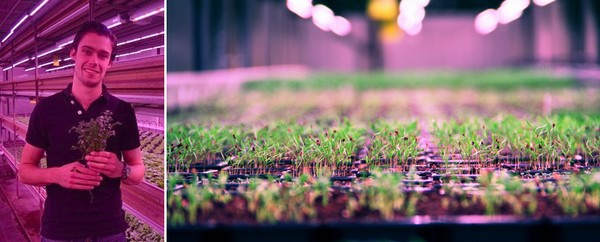
      Berjelle van Namen’s roots lie primarily in mushroom cultivation. His father, Johan, has a farm on the banks of the Maas river in the Netherlands. Yet, a few years ago, Berjelle decided to add herb cultivation. Not in a greenhouse or in full soil; in a converted mushroom cultivation cell.

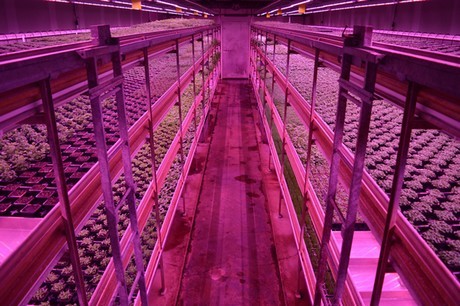
      The room is illuminated with violet-colored LED bulbs, and the containers holding the herbs are stacked, one atop the other. This can clearly be considered vertical farming. This concept is gaining increasing popularity among farmers - especially those who grow herbs, leafy and micro vegetables, and edible flowers.

      There have even recently been trials with soft fruit. It’s been standard practice in the mushroom world for some time now. Hence the relationship between Van Namen mushrooms and the herbs of Van Namen Specialties.

      For Berjelle, it started as an experiment. He encountered this cultivation method during his internship in Finland. There, at Robbe’s Little Garden, they grow lettuce, herbs, and micro vegetables in this way. According to Berjelle, vertical farming offers numerous advantages over traditional herb cultivation.

      Vertical farming’s advantages
      “With vertical farming, I can plant a herb, and can be sure it'll ready to sell in five weeks,” says Berjelle. “You also have certainty about your product’s quality. That’s because the product is optimally controlled. The plant grows evenly, thanks to the LED lighting, so it tastes better too."

      "It satisfies clients, who are increasingly demanding just-in-time delivery of products like herbs. Of course, we mustn’t forget the sustainable character of this cultivation method. Especially since farming like this uses very little gas, and no pesticides. We’re looking for ways to be highly energy-efficient too.”

      There was a demand for herbs
      Berjelle now grows about 12 kinds of herbs and has added a second cell. “In this way, we can vary cultivation conditions like using different temperatures," explains van Namen. "Basil is our top seller. It’s a popular herb that sells well. It’s followed by herbs such as parsley and mint.”

      Berjelles sells his herbs under the company’s own brand, Pika Surprisa, and Esperanto for ‘spicy surprises’. Still, Berjelle points out that it’s mainly enjoyable to cultivate and experiment with these herbs. “It’s not quite profitable yet. To achieve this, you’d have to seriously consider scaling up and adding rooms."

      "You’d also have to see if you want to grow only one variety. We chose to grow herbs mainly because of the increasing demand for year-round delivery and consistent quality. Vertical farming guarantees this. You can also be relatively lazy with your purchases. You know what you’ll get on the day you want it."

      "From the cultivation side, there aren’t as many operational issues either. Although you always have to deal with that. The only thing is, it doesn’t save labor; hands are still needed in that cell,” admits Berjelle.

      Herb sales differ from those of mushrooms. “We’ve attracted many new clients who really only buy herbs, and we’ve noticed fewer clients buying both. We keep these two products separate. That’s why the herbs fall under Van Namen Specialties. For example, we export mushrooms to countries like Germany and the UK, but not yet our herbs. Perhaps we will in the future.”

      For the coming months, Van Namen’s main goal is to make it through the corona crisis successfully. “The mushroom market was very volatile in these unusual times. It’s slowly recovering, but it still has a long way to go. There aren’t any major developments planned for the rest of the year, either. Now, it mostly a matter of serving our clients well,” Berjelle concludes.

      More information:
      Van Namen Specialties
      www.vannamenspecialties.nl

      Berjelle van Namen
      berjelle@vannamenspecialties.nl  

      The Link Lonk


      August 31, 2020 at 07:23PM
      https://ift.tt/3hL5Lyn

      Is vertical farming the future of herb cultivation? - hortidaily.com

      https://ift.tt/3eCf9lu
      Herb

      Sunday, August 30, 2020

      Funding the arts paramount for Herb Alpert - USA TODAY

      herb.indah.link
      [unable to retrieve full-text content]Funding the arts paramount for Herb Alpert  USA TODAY The Link Lonk


      August 31, 2020 at 05:11AM
      https://ift.tt/2Ggi2gt

      Funding the arts paramount for Herb Alpert - USA TODAY

      https://ift.tt/3eCf9lu
      Herb

      Featured Post

      Founder of herb garden at Morton Grove church inspired by 12th century St. Hildegard - Chicago Tribune

      herb.indah.link [unable to retrieve full-text content] Founder of herb garden at Morton Grove church inspired by 12th century St. Hildegard...

      Popular Posts