Rechercher dans ce blog

Sunday, August 30, 2020

HERB BENHAM: Plenty of room, memories in this old house - The Bakersfield Californian

herb.indah.link

We live in an old house. It’s old, big and empty. Empty but not empty because it is packed with 25 years of laughter, tears and exuberant conversation.

There is nothing fancy about this house. Fancy is the country club. Fancy is Seven Oaks. Fancy is black marble, vaulted ceilings and front doors so large giants don’t have to duck.

“Nothing fancy” was built 120 years ago. “Nothing fancy” has withstood the sun, rain, wind and earthquakes. “Nothing fancy” reveals its character rather than shows its age but people like me with houses like this, say things like that.

These houses are work, but show me one that isn’t. Houses are like ships on dry land. Stop working on them and they’ll either sink or fall down.

Sue likes the house but pay attention to the obits because the day after I go, this house will be on the market in a Herb-died-yesterday minute.

She likes the house but she’d like it better if it moved itself to a hill in Cambria overlooking the ocean or to the south of France. However, she’s raised four kids here, welcomed a million people here and as long as the air conditioning keeps working, she’s comfortable here.

The fact is, she’s more mature than I am. I get overly attached to things. She doesn’t. She is likely to see things as they are and I tend to live in a world where nothing changes, though probably everything has.

You could make a case for too-big-for-right-now. Five bedrooms, three offices, a living room, dining room, family room. It’s a lot of house when you’re not a lot of people.

If I had any sense, which I don’t, we’d do what a lot of people do at this stage — downsize — but that sounds too much like retirement.

I like walking in and out of rooms, sitting on the beds and staring at the walls.

I like empty. Empty is good for thinking. Empty is good for dreaming. Empty is good for remembering.

Start with the old living room, where we used to have the serious talks. If you were a kid and got called in, there was no place to run or hide and no chance of burrowing under the green sofa. You were stuck and you were guilty.

Katie’s room, the original master bedroom, is peaceful, perfectly proportioned and lit through the big picture windows facing south and the transom facing west.

Herbie’s room was the smallest, but facing north, the coolest. Sam’s, painted black during his teenage years, was edgy like its inhabitant. Thomas’ was center-cut and never out of balance.

There are telephone rooms, foyers, sleeping porches that have become something else. It’s like one of those houses in children's books on top of a hill. Mysterious, slightly dilapidated and always capable of surprise.

Why would I want to leave now? Good is getting better. You wouldn’t throw a pair of boots out that had grown comfortable with wear. A sweatshirt that was turning soft.

People live here even if they don’t. The kids, former owner and friend Ron May, the guests who boarded here when it was a boardinghouse in the ’50s and ’60s. Their footprints are lighter than dust and visible to the mind’s eye.

There is a song by Acoustic Eidolon called “75 North Second Street.” It’s about old houses and the people who like them. People who would as soon be buried under the floorboards next to all the other people who felt the same way.

“Plaster cracks like wrinkles tell my stories over time.”

Those aren’t wrinkles, those are beauty marks. There are plenty. There will be plenty more.

The Link Lonk


August 30, 2020 at 02:15PM
https://ift.tt/3jsAG2W

HERB BENHAM: Plenty of room, memories in this old house - The Bakersfield Californian

https://ift.tt/3eCf9lu
Herb

Herb Essential Oil Market Extensive Growth Opportunities to Be Witnessed by 2019-2025 - The News Brok

herb.indah.link

The global Herb Essential Oil Market Report offers valuable data on this report with the aid of fragmenting the market into different segments. Various vital elements are covered in the global Herb Essential Oil Market research report, including regional industry perspectives, geographic developments, country-level assessment, competitive environment, market share analysis of companies, and top company proreports.

This report presents the worldwide Herb Essential Oil market size (value, production and consumption), splits the breakdown (data status 2019 and forecast to 2025), by manufacturers, region, type and application. This study also analyzes the Herb Essential Oil market status, market share, growth rate, future trends, market drivers, opportunities and challenges, risks and entry barriers, sales channels, distributors and Porter’s Five Forces Analysis. The report presents the market competitive landscape and a corresponding detailed analysis of the major vendor/key players in the Herb Essential Oil market. 

For more insights into the Market, request a sample of this report (Including Full TOC, List of Tables & Figures, Chart) @ https://www.marketresearchhub.com/enquiry.php?type=S&repid=2180989&source=atm

The report provides a valuable source of insightful data for business strategists and competitive analysis of Herb Essential Oil market. It provides the Herb Essential Oil industry overview with growth analysis and futuristic cost, revenue and many other aspects. The research analysts provide an elaborate description of the value chain and its distributor analysis. This extensive Herb Essential Oil study provides comprehensive data which enhances the understanding, scope and application of this report. 

The following manufacturers are covered in this report:
Albert Vieille
Berje
Elixens
Ernesto Ventos
Fleurchem
H.Interdonati
INDUKERN INTERNACIONAL
Penta Manufacturing Company
Robertet Group
Ultra international
Treatt Plc
PerfumersWorld
Ungerer & Company

Herb Essential Oil Breakdown Data by Type
Therapeutic Grade
Others
Herb Essential Oil Breakdown Data by Application
Medical
Spa & Relaxation
Others

Herb Essential Oil Production Breakdown Data by Region
United States
Europe
China
Japan
Other Regions

Herb Essential Oil Consumption Breakdown Data by Region
North America
United States
Canada
Mexico
Asia-Pacific
China
India
Japan
South Korea
Australia
Indonesia
Malaysia
Philippines
Thailand
Vietnam
Europe
Germany
France
UK
Italy
Russia
Rest of Europe
Central & South America
Brazil
Rest of South America
Middle East & Africa
GCC Countries
Turkey
Egypt
South Africa
Rest of Middle East & Africa

The study objectives are:
To analyze and research the global Herb Essential Oil capacity, production, value, consumption, status and forecast;
To focus on the key Herb Essential Oil manufacturers and study the capacity, production, value, market share and development plans in next few years.
To focuses on the global key manufacturers, to define, describe and analyze the market competition landscape, SWOT analysis.
To define, describe and forecast the market by type, application and region.
To analyze the global and key regions market potential and advantage, opportunity and challenge, restraints and risks.
To identify significant trends and factors driving or inhibiting the market growth.
To analyze the opportunities in the market for stakeholders by identifying the high growth segments.
To strategically analyze each submarket with respect to individual growth trend and their contribution to the market.
To analyze competitive developments such as expansions, agreements, new product launches, and acquisitions in the market.
To strategically profile the key players and comprehensively analyze their growth strategies.

In this study, the years considered to estimate the market size of Herb Essential Oil :
History Year: 2014-2018
Base Year: 2018
Estimated Year: 2019
Forecast Year 2019 to 2025
For the data information by region, company, type and application, 2018 is considered as the base year. Whenever data information was unavailable for the base year, the prior year has been considered.

For Information On The Research Approach Used In The Report, Ask to Our Industry [email protected] https://www.marketresearchhub.com/enquiry.php?type=E&repid=2180989&source=atm 

Regional Analysis for Herb Essential Oil Market: 

For comprehensive understanding of market dynamics, the global Herb Essential Oil market is analyzed across key geographies namely: United States, China, Europe, Japan, and Rest of the World (South-east Asia, India, and others). Each of these regions is analyzed on basis of market findings across major countries in these regions for a macro-level understanding. 

Influence of the Herb Essential Oil market report: 

-Comprehensive assessment of all opportunities and risk in the Herb Essential Oil market.

– Herb Essential Oil market recent innovations and major events.

-Detailed study of business strategies for growth of the Herb Essential Oil market-leading players.

-Conclusive study about the growth plot of Herb Essential Oil market for forthcoming years.

-In-depth understanding of Herb Essential Oil market-particular drivers, constraints and major micro markets.

-Favorable impression inside vital technological and market latest trends striking the Herb Essential Oil market. 

You can Buy This Report from Here @ https://www.marketresearchhub.com/checkout?rep_id=2180989&licType=S&source=atm 

The report has 150 tables and figures browse the report description and TOC: 

Table of Contents 

1 Study Coverage

1.1 Herb Essential Oil Product

1.2 Key Market Segments in This Study

1.3 Key Manufacturers Covered

1.4 Market by Type

1.4.1 Global Herb Essential Oil Market Size Growth Rate by Type

1.5 Market by Application

1.5.1 Global Herb Essential Oil Market Size Growth Rate by Application 

2 Executive Summary

2.1 Global Herb Essential Oil Market Size

2.1.1 Global Herb Essential Oil Revenue 2014-2025

2.1.2 Global Herb Essential Oil Production 2014-2025

2.2 Herb Essential Oil Growth Rate (CAGR) 2019-2025

2.3 Analysis of Competitive Landscape

2.3.1 Manufacturers Market Concentration Ratio

2.3.2 Key Herb Essential Oil Manufacturers

2.3.2.1 Herb Essential Oil Manufacturing Base Distribution, Headquarters

2.3.2.2 Manufacturers Herb Essential Oil Product Offered

2.3.2.3 Date of Manufacturers in Herb Essential Oil Market

2.4 Key Trends for Herb Essential Oil Markets & Products 

3 Market Size by Manufacturers

3.1 Herb Essential Oil Production by Manufacturers

3.1.1 Herb Essential Oil Production by Manufacturers

3.1.2 Herb Essential Oil Production Market Share by Manufacturers

3.2 Herb Essential Oil Revenue by Manufacturers

3.2.1 Herb Essential Oil Revenue by Manufacturers (2019-2025)

3.2.2 Herb Essential Oil Revenue Share by Manufacturers (2019-2025)

3.3 Herb Essential Oil Price by Manufacturers

3.4 Mergers & Acquisitions, Expansion Plans

More Information…….

For More Information Kindly Contact:

marketresearchhub

Mr. Rohit Bhisey,

90 State Street,

Albany NY,

United States – 12207

Tel: +1-518-621-2074

USA-Canada Toll Free: 866-997-4948

Email: [email protected]

The Link Lonk


August 30, 2020 at 04:39PM
https://ift.tt/2EEn31J

Herb Essential Oil Market Extensive Growth Opportunities to Be Witnessed by 2019-2025 - The News Brok

https://ift.tt/3eCf9lu
Herb

Saturday, August 29, 2020

Thyme in the garden - sidneydailynews.com

herb.indah.link
photo

Chives is one type of herb that can be used when cooking.

Courtesy photo

SIDNEY — Herbs are durable plants requiring little attention, generally pest free and have multiple uses. So what is an herb? According to Wikipedia “In general use, herbs are plants with savory or aromatic properties that are used for flavoring and garnishing food, for medicinal purposes, or for fragrances…” Herbs reward us with flowers, fragrance and delicious flavor. Many herbs serve to help us in the garden, in the kitchen, in the craft room and for pure beauty.

Herbs come in all forms. In west central Ohio thyme, savory, oregano, sage, chives (garlic and onion), and mint are hardy perennials and appear year after year. Rosemary and lavender are examples of tender perennials. Parsley for example is a biennial, meaning that the first year it begins growing but reaches maturity and produces seeds the second year. In Ohio many of our herbs are treated as annuals. These include basil, borage, dill, and cilantro. However, some will self seed and provide you with a bounty of herbs the following year.

As a general rule herbs like sun and well drained soil. Prepare the soil with organic matter and loosen compact soil before planting. Consider locations with at least six hours of sun a day. Keep in mind fences, walls and buildings that will influence the herbs’ exposure to wind, heat, cold and rain. Containers and raised beds are an excellent choice for herbs.

Herbs are available as plants or seeds. Potted herbs are likely to mature in less time than seeds. Rosemary, sage and thyme are examples of herbs that are quicker and easier to start with a plant. However parsley, cilantro borage, chives and basil are easy to grow from seeds. Follow package directions for specific preference. Parsley and cilantro for example, benefit from soaking the seeds for 24 hours prior to planting. Basil hates cool temperatures, so plant after the dangers of frost or use a cold frame.

Plant herbs in containers or directly into the garden. Herbs perform outstanding in planters, allowing you to move the container for the optimum environment. Consider that they are more susceptible to drying out during the heat of summer and to damage during the winter. Planting directly into the garden is a perfect choice for the many of the herbs. Sage, thyme, oregano and chives can live for multiple years once established. Another choice is to create a specific herb garden or herb container. They can be planted in an informal garden bed or with vegetables and/or among the flowering plants. For indoor enjoyment, some herbs may be brought indoors. Do not expect them to flourish as they did outdoors. They love being outdoors but are much more particular indoors.

Understand the plants characteristics. Many herbs require very little care but do benefit from occasional weeding, pruning, deadheading and staking. Many herbs need little supplemental watering if planted in their preferred conditions. Fertilizing in the spring is a good practice but over fertilizing will result in leggy plants. Be knowledgeable about the herb that you plant. For instance the plants from the mint family have a tendency to spread so plant in a container or in a tile buried in the ground to curtail its invasion. It is not unusual for some herbs to self seed allowing a new growth the following year. The plant can be dead headed if this is undesirable

One of the purposes of growing herbs is to harvest for culinary purposes. The best time to harvest is when the plant’s oil is at its maximum. This time is generally when the flowers are soon to open. Also harvest early in the day after the dew has evaporated. Add to your recipe at the very end of cooking to capture the full flavor. You can substitute fresh herbs for dried herbs by multiplying times three. For every 1 teaspoon of dried herb used 3 teaspoons of chopped fresh herbs.

Experiment with new recipes, infused water, basil pesto, and chimichurri. Herb butters can be frozen for use all year long. Vinegars infused with herbs and stored in refrigerator have a long shelf life. Freeze chopped herbs in ice cube trays with olive oil is another option. Of course they can also be dried but lose some of their flavor.

But herbs are not just for eating. Many make excellent companion plants. Bees, hummingbirds and butterflies are attracted to many herbs. The black swallowtail butterfly uses the herbs from the parsley family as its host plant. Incorporate herbs into crafts such as infused soaps, pressed flowers, floral bouquets and even fire starters. And lastly herbs are attractive plants to add to your landscape.

Is it “thyme” to bring herbs to your garden?

For more information about herbs and other gardening topics, contact Shelby County Master Gardeners at shelby.mastergardeners@gmail.com, or call the OSU Extension office at (937) 498-7239.

Chives is one type of herb that can be used when cooking.

The writer is a master gardener volunteer with the OSU Extension Office.

The Link Lonk


August 29, 2020 at 05:36PM
https://ift.tt/2YKlndU

Thyme in the garden - sidneydailynews.com

https://ift.tt/3eCf9lu
Herb
Herb Rothschild Jr.: Meet our next 2nd District U.S. representative - Ashland Tidings

herb.indah.link
[unable to retrieve full-text content]Herb Rothschild Jr.: Meet our next 2nd District U.S. representative  Ashland Tidings The Link Lonk


August 29, 2020 at 02:00PM
https://ift.tt/2QBoZuc

Herb Rothschild Jr.: Meet our next 2nd District U.S. representative - Ashland Tidings

https://ift.tt/3eCf9lu
Herb
These Brewers Are Making Beer That 'Tastes Like Southern Illinois' — With Herbs, Roots And Mushrooms - St. Louis Public Radio

herb.indah.link

Aaron Kleidon kneels to stoke a campfire under a massive copper kettle, as hundreds of gallons of molasses-colored brew churn and bubble inside.

He shakes a few handfuls of dried sweet clover into a cotton sack, which will steep in the beer and infuse it with a subtle vanilla flavor.

Like all of the beers produced at Scratch Brewing Co., this soon-to-be stout relies on hyperlocal ingredients foraged from the surrounding forest in Ava, Illinois, about 80 miles southeast of St. Louis. Nestled within a patchwork of corn and soybean fields, the microbrewery has received critical acclaim for its unusual creations, which range from tangy beet-flavored sours to chanterelle mushroom ales.

“The challenge is getting the exact flavor you smell in the forest into the beer and finding which combinations of plants get you there,” said Kleidon, the brewery’s co-owner.

0828_SF_scratch_06.jpg

Shahla Farzan

A mixture of ground barley and chocolate malt steeps in hot water inside a large wooden barrel, creating a sweet liquid that will eventually become a stout beer.

Since Scratch opened its doors in 2013, Kleidon estimates he and co-owner Marika Josephson have used at least 150 different plants in their beers, including sassafras, fig leaves and dandelions.

Many grow wild on the 75-acre forest adjacent to the property, which Kleidon’s parents have owned for more than two decades. The brewers have cultivated others from wild seeds, like maypop, a trailing native vine that produces egg-shaped passionfruit.

“We knew from the beginning that we wanted Scratch to be a place that was exploring a sense of place,” Josephson said. “What does it mean to make beer that tastes like southern Illinois, that uses ingredients that are from here?”

0828_SF_scratch_10.jpg

Shahla Farzan

Maypop, a native passionfruit, grows along the covered porch at Scratch Brewing Company in Ava, IL. The brewers collected the fruit from the forest and cultivated it on their farm.

Despite its out-of-the way location, the scrappy little brewery has developed a loyal following and garnered national attention, earning a spot as a semifinalist for a James Beard Award earlier this year.

Supporting farmers

Scratch Brewing Co. produces new beers every week or so — a labor-intensive process that begins with grinding several hundred pounds of grain at 7 a.m. The grain, which comes from Sugar Creek Malt in central Indiana, is then steeped in hot water inside wooden barrels, producing a sweet liquid.

On a recent “brew day,” Kleidon tended to the kettle of boiling, malty brew while Josephson hurried to a hand-built brick oven to check on trays of roasting hickory bark.

“You can see these pieces here are getting that nice, dark, chocolatey brown; that’s exactly what we want,” Josephson said, flipping the slabs of bark. “We almost want this to be smoking by the time we put it in the beer.”

0828_SF_scratch_09.jpg

Shahla Farzan

Aaron Kleidon, co-owner of Scratch Brewing Company, pumps the boiling, malty liquid through a cooling system before transferring it into a fermenter.

Through trial and error, they discovered the bark, which naturally peels away in sheets from shagbark hickory trees, makes the beer taste like toasted marshmallows.

But for these brewers, the work is about more than dreaming up new flavor combinations.

All of the ingredients are either grown on their farm, foraged from the surrounding forest or purchased from local farmers, including the hops and grain. Though it can be difficult to source everything they need, Josephson said, growing or purchasing the ingredients locally is more sustainable than shipping them thousands of miles.

To fill in the gaps, the brewery grows some ingredients on its five-acre property, which includes a rambling herb garden, high tunnel greenhouse and goat paddock (home to Shelly, Wheezy, Zelda and Brown Goat).

0828_SF_scratch_08.jpg

Shahla Farzan

Shelly the goat tentatively accepts a fistful of grass from Scratch Brewing Company farmer Kris Pirmann. The brewery, which cultivates its own vegetables, herbs and hops, has built a network of local farmers to supply ingredients for brewing beer.

Kris Pirmann, Scratch’s full-time farmer, points out the different herbs in the garden, including lovage, anise hyssop and elecampane, a medicinal herb with a camphor-like aroma. “Working here forces you to be creative and think about what you can grow that's unique or how you can use something that's old in a unique way,” he said.

Needless to say, the brewery’s owners are serious about supporting local agriculture.

Over the past decade, Josephson said, “farmhouse beer” has become a loosely used marketing term — and often such beers have no connection to actual farms.

0828_provided_scratch_02.jpg

Scratch Brewing Company

Scratch Brewing Company produces about 275 barrels of beer each year in small batches. The brewery's outdoor beer garden is currently open Friday through Sunday.

“If somebody's picking up a bottle because they think that they're supporting a farm, but they're not, that's where I think there's a problem,” Josephson said. “We spend more money to have a farmer on staff, to put in a greenhouse and support these ingredients that we're growing here. That's why our beer costs a little bit more. It's supporting this whole network that we're trying to develop and sustain here.”

Though the brewery, which sells most of its beer in house, has lost business during the pandemic, she added, having a strong connection with the surrounding community has helped them stay afloat.

For Kleidon, who grew up in Ava, building a more robust local economy is particularly important.

“We know exactly the person that's going to benefit when the money gets spent,” he said. “Not only do we get the best possible product, we’re also building a community.”

Follow Shahla on Twitter: @shahlafarzan

The Link Lonk


August 29, 2020 at 12:52AM
https://ift.tt/3lx8NIy

These Brewers Are Making Beer That 'Tastes Like Southern Illinois' — With Herbs, Roots And Mushrooms - St. Louis Public Radio

https://ift.tt/3eCf9lu
Herb

Friday, August 28, 2020

4 herbs that may help boost your immune system naturally - Insider - INSIDER

herb.indah.link
  • Herbs that may benefit the immune system include echinacea, garlic, ginseng, and reishi mushrooms.
  • Ginseng can help your immune system by regulating immune cells, like T cells, that can help your body fend off threats.
  • Consuming garlic is also beneficial for the immune system, since it contains allicin, a compound that has antibacterial properties. 
  • This article was reviewed by Jason R. McKnight, MD, MS, a family medicine physician and clinical assistant professor at Texas A&M College of Medicine. 
  • Visit Insider's Health Reference library for more advice.

Whether you're facing cold and flu season or simply trying to stay healthy in general, it's crucial to keep our immune system robust. The immune system is responsible for preventing and fighting off infections, and when your immune system is strong, you're more likely to be able to ward off sicknesses. 

It's important to note that you won't be able to rely on herbs exclusively to fight sickness. To have a strong immune system, you need to get certain vitamins, eat healthy, sleep well, and exercise. And of course, the best way to reduce your risk of illness is to wash your hands frequently and avoid contact with people who may be sick. 

But on top of those recommended practices, some herbs may carry additional immune benefits. Here are four herbs recommended by experts to help you boost your immune system.

How herbs can benefit the immune system

Many herbs are antagonistic to pathogens, meaning they actively fight microorganisms like viruses, bacteria, worms, and bugs, says Mark Frost, MSTCM, L.Ac., Herbal Medicine Department Chair at American College of Traditional Chinese Medicine.  

And it's not just those experts in the field of traditional Chinese medicine who say herbs have these immune-boosting powers. Those who practice Western medicine are also in favor of adding herbs to a healthy diet. 

Deborah Ann Ballard, M.D., M.P.H., Internal Medicine Doctor at Duke Integrative Medicine, says that she recommends using a variety of herbs and spices in cooking to promote consumption. 

"Incorporating them regularly into a healthy diet has a very low risk of harm and a reasonable chance of helping our immune system fight off infections," says Ballard.

1. Echinacea

Echinacea is an herb with many uses. According to Mount Sinai Hospital, it has properties that can relieve pain and reduce inflammation, in addition to having antiviral and antioxidant effects. This makes it an ideal herb for supporting your immune system and boosting its function.  

A 2006 systematic review published in Cochrane Library determined that taking echinacea after cold symptoms like runny nose and congestion, can help reduce both the duration of how long you're sick and the severity of the cold. However, the researchers said that results were not consistent throughout all of the studies they analyzed. 

Additionally, a 2020 systematic review published in Advances in Integrative Medicine determined that echinacea can be beneficial for acute respiratory infections if the herb is taken at the onset of symptoms. This is because it can decrease the levels of pro-inflammatory cytokines that are associated with inflammation and respiratory infections. 

Frost says if you feel like you've been exposed to a lot of people and potential germs, or you feel like you might be getting sick, try taking echinacea two or three days in a row. Follow the dosing instructions on the packaging of the echinacea product you're consuming, or consult a herbalist. You can put some in tea or use it as a tincture.

2. Garlic

Garlic is a powerful antimicrobial herb, especially for the gut, says Frost. In fact, it is believed to be antibacterial, antiviral, and antiprotozoal (meaning it can fight parasites). Ballard says these properties can help fight off chest infections and respiratory infections.

Garlic contains allicin, and this is believed to be the compound that makes garlic antibacterial. According to a 2014 review published in Avicenna Journal of Phytomedicine, this makes it possible for garlic to fight bacteria such as salmonella and E. coli, which are bacteria that cause food poisoning.

On top of this, Frost says garlic is ideal for strengthening the digestive system. This makes it a good choice for treating parasites or worms in the gut. The Avicenna Journal of Phytomedicine review also references a study in which garlic was used to treat giardiasis, which is an infection caused by a parasite. Patients' symptoms resolved after 24 hours, after garlic was administered either through a 1mg/mL liquid extract twice a day, or a 0.6 mg/mL garlic capsule. 

Additionally, garlic has been found to help fight the common cold with its antiviral properties. A 2014 review published in Cochrane Library discussed one study that gave participants either garlic supplements with 180 mg of allicin daily over the course of 12 weeks or a placebo. The researchers found that those who received garlic were less likely to get a cold, and if they did get sick, they were sick for less days than those in the placebo group. However, more research is needed.

3. Ginseng

According to one study, this herb strengthens the HPA axis — the hypothalamic, pituitary, adrenal axis — which is responsible for regulating the immune system's response to stress. 

Chronic or severe stress can weaken the immune system, so it's important that you have a strong HPA axis to help manage the effect stress has on your immune system. By strengthening the HPA axis, you are strengthening the immune system, Frost says. 

Ginseng can also keep the immune system balanced by regulating various types of immune cells — including T cells, B cells, natural killer cells, and macrophages — which identify threats to the body and fight them off. There's even evidence that ginseng can fight off Influenza A in mice, although human research is needed. 

Frost says ginseng is very strong, and if you're considering incorporating it into your regimen, you should consult a herbalist. You can consume ginseng by making a tea with fresh ginseng root, or you can take ginseng capsules.

4. Reishi

Reishi, also known as Lingzhi, is a type of mushroom. Reishi mushrooms contain beta-glucans, which are believed to stimulate different types of cells in the immune system, including monocytes, natural killer cells, and dendritic cells. By stimulating these cells, they are better able to detect and fight off infections. 

There's even some evidence that the beta-glucans in reishi can have anti-tumor effects, stopping the growth of cancer cells, according to the Memorial Sloan Kettering Cancer Center. However, more research needs to be done to further understand the benefits of resihi mushrooms. 

You can buy reishi powder or capsules to consume. 

The bottom line

Before you start taking any of these herbs, you should consult with your doctor to make sure that they will not negatively interact with any medications you're taking. You should also make sure that you get an accurate diagnosis if you are sick — it's worth visiting a doctor to see which treatments they recommend before you try herbal remedies. 

If you want to try these herbs, speaking with a qualified herbalist or traditional Chinese medicine practitioner can help you figure out which herbs might work for you, as well as the best way to take them. They can also help you determine where to buy the herbs to make sure you are using quality products. 

The Link Lonk


August 29, 2020 at 03:25AM
https://ift.tt/31E0lPO

4 herbs that may help boost your immune system naturally - Insider - INSIDER

https://ift.tt/3eCf9lu
Herb

“Organic herbs aren't the only thing that interests us; so does the social aspect” - hortidaily.com

herb.indah.link

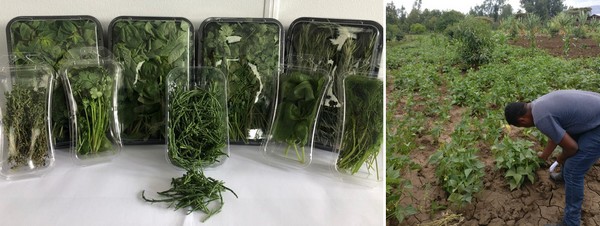
Herb growers, in general, are increasingly looking for zero residue products for that market. For Wilco Heemskerk of the Dutch company, Fresh Organic Choice, there’s, however, only one thing that matters - 100% organic herbs, delivered throughout the year.

“Our sourcing and strength are designed in such a way that we can supply organic herbs to the market year-round,” says Wilco. “Between May and September, these come from our growers in the Netherlands and Germany. We also get herbs from abroad. Mainly from Southern European countries such as Portugal, Spain, and Italy.”

“We have a wide range of organic herbs that are added to meal boxes. We supply retailers, wholesalers, and hospitality industry suppliers too. This spread has helped us to get through the corona crisis. Sales differed greatly per sector as well as per the products we offer.”

“We’ve also been busy expanding our range. This year, our assortment of organic herbs is complete. From the beginning of 2020, we’ve managed to include French Dragon. We also offer unusual types of herbs from March to September. These are Thai Basil, Red Basil, and Garlic Chives,” Wilco continues.

“From 2021, we hope to be able to supply these special varieties to our clients all year round. As a last novelty, we’ve recently introduced organic Salicornia, which we added to our range. We had been working on this behind the scenes for some time.”

“We work closely with our customers and suppliers, so we’re able to develop these novelties. In doing so, we try to create space for them on the existing market. We’re not idle regarding packaging either,” adds Wilco. “Most of our packaging is made of PLA and is, therefore, compostable. Many of our clients demand PLA-produced packaging.”

“This will only increase in the future. At the end of 2019, we were able to develop and introduce a new PLA tray. This was done for one of our meal box clients. We did this in partnership with Patrick Gerritsen from Bio4Pack. That proved to be a great success for the client. There are still plenty of opportunities in this area as well.”

“We pay close attention to our clients and maintain close contact with all our suppliers - whether they be growers or produce packaging or other materials. In this way, we’re building a good, durable organization and environment that consider the social side of things too. We’re doing this with the collaboration and trust of our business partners.”


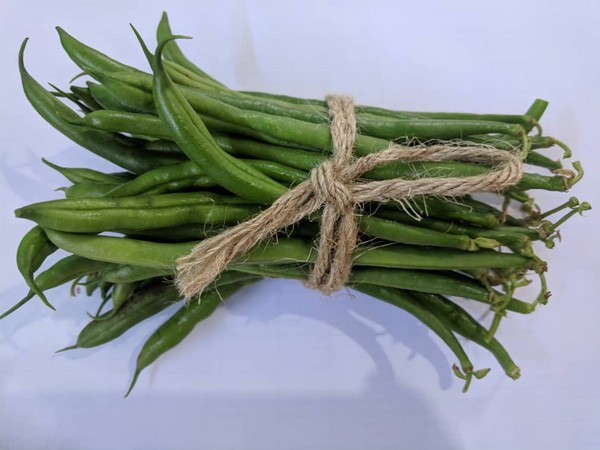
In addition to herbs Wilco also imports green beans from Ethiopia

Ethiopia
Fresh Organic Choice doesn’t source its herbs solely from the Netherlands, Germany, and southern Europe. A small proportion of its herbs come from Ethiopia. There, Wilco works with local growers in ‘a type of cooperative’. He’s set up an organic cultivation program in that country. “It’s sometimes tricky,” Heemskerk says.

“People who buy organic products often aren’t eager to purchase flown-in herbs. That’s primarily due to this kind of import’s CO2 emissions. Still, we choose to import these together with products like organic legumes from Ethiopia. That’s because this program supports the farmers and their families. They can get a fair price for their products. When we explain that social compliance aspect, clients understand.” 

Zero residue
Many traditional herb growers are being drawn to the idea of zero residues. “In principle, organic is a form of zero residue farming. We use MRL analysis to keep track of whether our growers are sticking to the terms of organic herb farming,” explains Wilco. “We can still get added value for organic herbs.”

“And, in the Netherlands and Europe, there’s still plenty of room to grow on this market. Supermarkets still sell a lot of conventional herbs.” Wilco is also already considering eventually expanding the company’s assortment. “We want to bring more niche products onto the market next year. These used to be difficult to grow organically.”

“We’re also going to keep offering our organic Ethiopian beans and sugar snaps. And we’ll continue supplying organic radishes and lettuce outside the Dutch season. These are used in the meal boxes and by organic vegetable processors,” says Wilco.

The organic sector isn’t (yet) very interested in innovations like vertical farming and hydroponics. “The European Union has clear regulations regarding organic herbs and other organic products. They can only be called organic if they’re grown in a field. That’s why we don’t find these new ideas attractive at the moment. This type of cultivation might be 100% and have zero residues. Or it might be something else. What it’s not, is organic.”

Wilco notices there are increasing weather extremes that affect herb farming. “We had a dry period in June. During that time, certain herbs suffered greatly from aphids. There are usually fewer of these when the seasons change. But, it rained at the end of June and the beginning of July. So, for organic farming, the weather’s changing for the better,” Wilco concludes.

More information:
Fresh Organic Choice
www.freshorganicchoice.nl

Wilco Heemskerk
wilcoheemskerk@forc.eu 

The Link Lonk


August 28, 2020 at 06:23PM
https://ift.tt/3b5lKog

“Organic herbs aren't the only thing that interests us; so does the social aspect” - hortidaily.com

https://ift.tt/3eCf9lu
Herb

Featured Post

Founder of herb garden at Morton Grove church inspired by 12th century St. Hildegard - Chicago Tribune

herb.indah.link [unable to retrieve full-text content] Founder of herb garden at Morton Grove church inspired by 12th century St. Hildegard...

Popular Posts